
Your concrete driveway is showing signs of wear — cracks running across panels, a section that's heaved up, or surface spalling that's getting worse every season. The question most homeowners ask at this point is: do I need to repair it, or replace the whole thing?
The answer depends on several factors — the type and extent of the damage, the age of the slab, what's happening underneath it, and what you want the driveway to look like long-term. Here's how we think through that decision.
Types of Damage — and What They Tell You
Not all driveway damage is the same. The type of damage is often the clearest indicator of whether repair or replacement is the right call.
Hairline and Shrinkage Cracks
Fine surface cracks that don't go all the way through the slab are common in older concrete and are usually cosmetic. They can be sealed to prevent water intrusion and further deterioration. These rarely indicate a need for full replacement.
Structural Cracks
Cracks that run the full depth of the slab, or that show vertical displacement between the two sides, are structural. A crack where one side is higher than the other means the sub-base has shifted or settled unevenly. Patching the surface won't fix the underlying movement — and the crack will return.
When structural cracks are isolated to one or two panels and the rest of the driveway is sound, panel replacement (removing and reporing just the affected sections) is often a cost-effective solution. When structural cracking is widespread across the slab, full replacement is usually the better long-term investment.
Spalling
Spalling is surface deterioration where the top layer of concrete flakes or chips away, exposing the aggregate beneath. Minor spalling can be addressed with resurfacing or patching. Deep spalling that exposes rebar, or spalling that covers a large percentage of the surface, typically means the concrete has reached the end of its useful life and replacement is the more durable path.
Heaving and Settlement
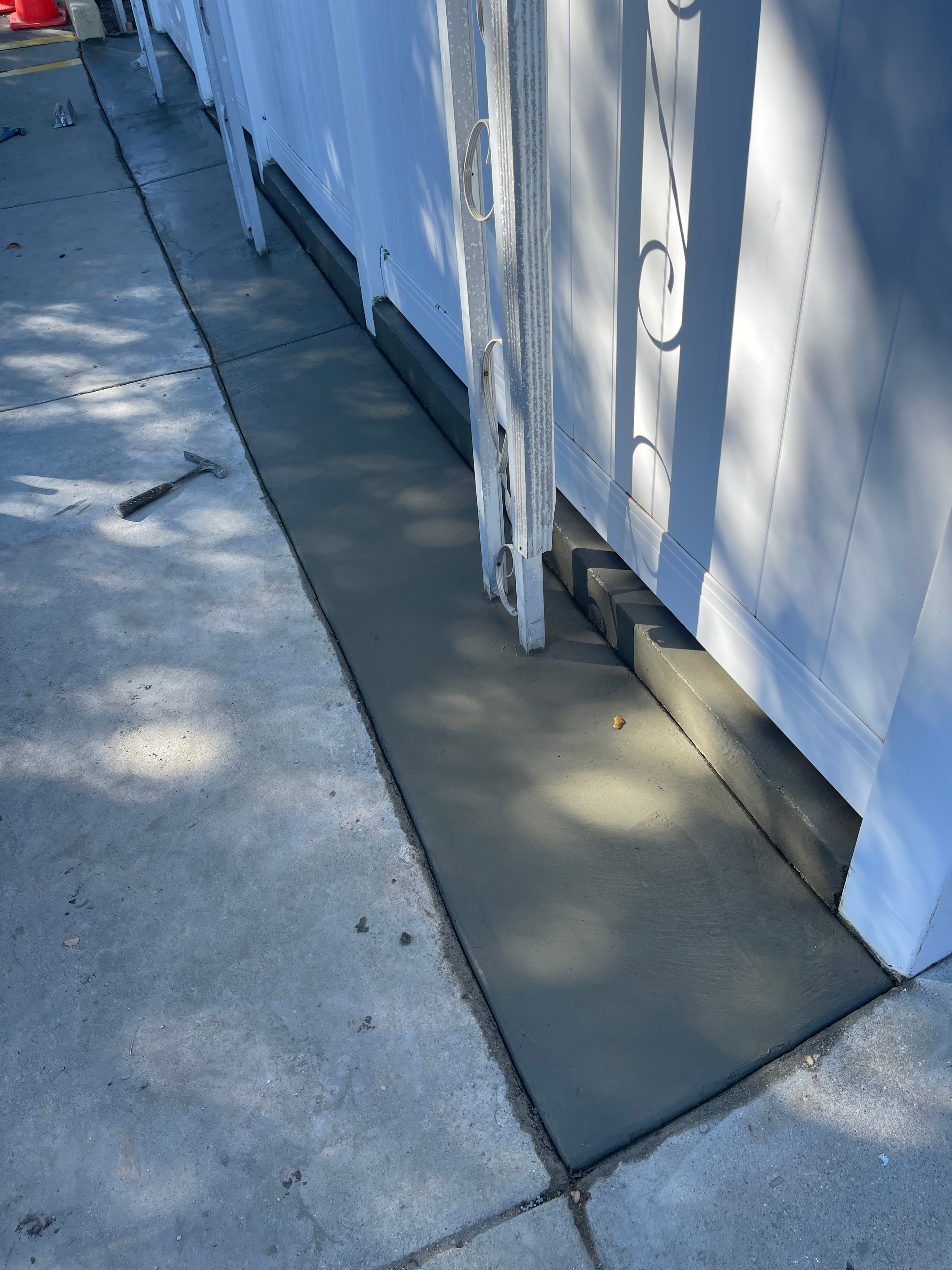
In Los Angeles County, the most common causes of driveway heaving are tree roots growing under the slab and expansive clay soils that swell when wet and shrink when dry. Settlement — where sections sink rather than rise — is usually caused by sub-base erosion or compaction failure.
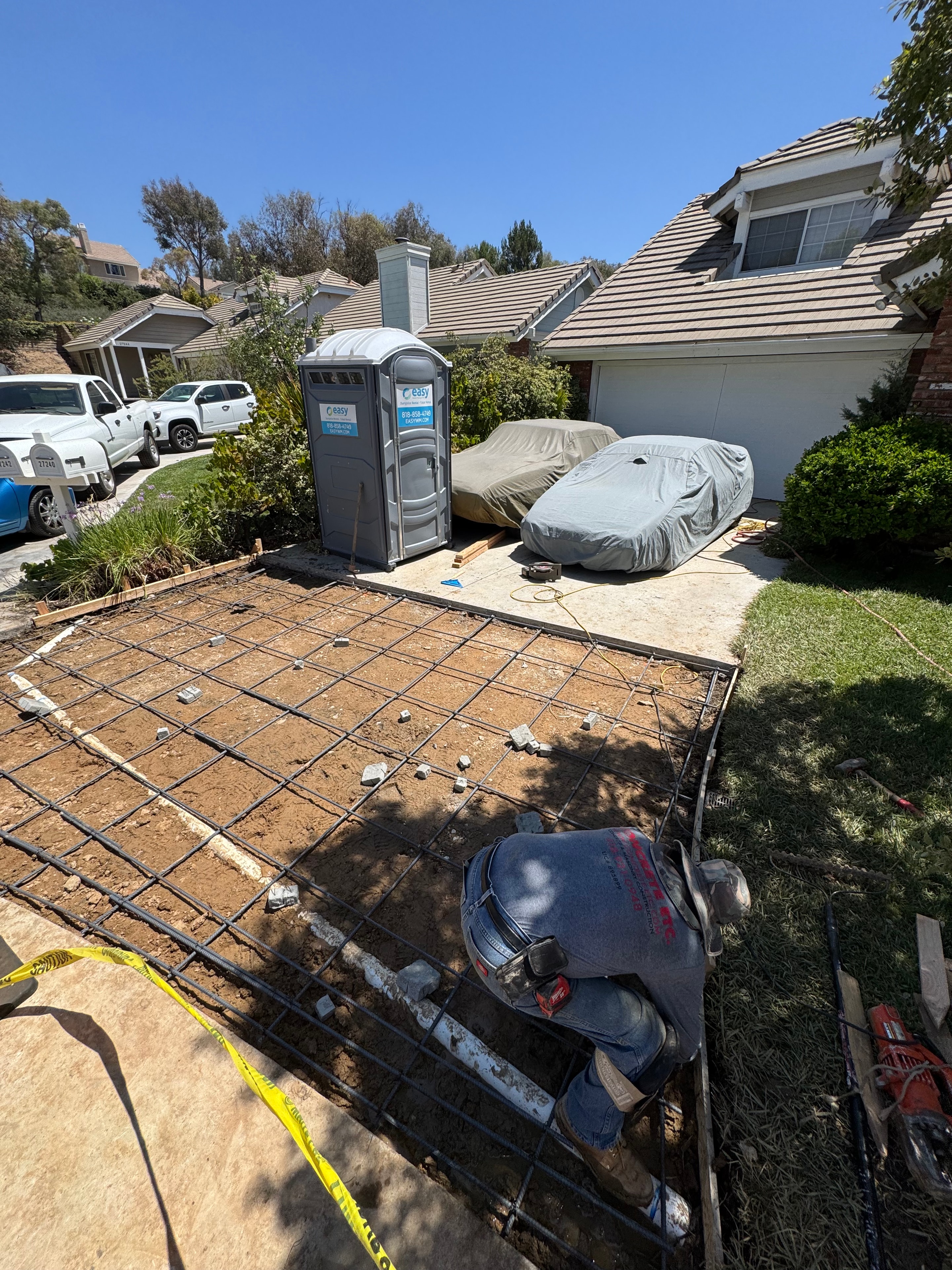
Both conditions require addressing the underlying cause, not just the surface. If tree roots are the culprit, they need to be cut and treated before new concrete is poured — otherwise the problem recurs. If the sub-base has failed, it needs to be regraded and recompacted before any new slab will hold.
Age of the Driveway
A properly installed concrete driveway in Southern California typically lasts 30–40 years. If your driveway is 10–15 years old and has isolated damage, repair makes sense — there's a lot of useful life left in the slab. If it's 30+ years old with widespread cracking, multiple patches that haven't held, and surface deterioration across the board, you're likely past the point where repair is cost-effective.
The math changes when you factor in the cost of repeated repairs over time versus a single replacement that gives you 30+ more years.
The Patch History Problem
One of the clearest signals that a driveway has reached the end of its repair life is a history of patches that keep failing. If the same section has been patched two or three times and the damage keeps returning, the underlying issue — sub-base movement, root pressure, or slab deterioration — isn't being resolved by surface repair.
At that point, continuing to patch is spending money on a temporary fix rather than a permanent solution.
When Repair Is the Right Call
- Isolated cracking in one or two panels with the rest of the slab in good condition
- Surface spalling that hasn't penetrated deeply into the slab
- Driveway is less than 20 years old with no history of repeated patch failures
- Damage is clearly localized to a specific cause (a single tree root, one settled panel)
- Budget constraints make full replacement impractical right now
When Replacement Is the Right Call
- Structural cracking across multiple panels with vertical displacement
- Widespread spalling covering a large percentage of the surface
- Driveway is 30+ years old with a history of repeated repairs
- Sub-base failure requiring full excavation and recompaction
- Tree root damage that has heaved multiple panels
- You want a finish upgrade — stamped, colored, or decorative — that can't be achieved by patching
For more on what a new concrete driveway involves, see our post on what goes into the cost of a concrete driveway in Los Angeles County.
The Onsite Assessment
The most reliable way to determine whether repair or replacement is right for your driveway is an onsite walkthrough. Photos help, but they don't show sub-base conditions, the depth of cracks, or how the slab sounds when you walk it. We look at all of those things before making a recommendation.
Concrete Etc., Inc. handles both concrete repair and full driveway replacement throughout Los Angeles County. Our concrete repair service covers everything from isolated panel replacement to full slab removal and repour.
Serving Los Angeles County
We handle concrete driveway repair and replacement throughout Los Angeles County, including:
See our full San Fernando Valley, San Gabriel Valley, and Los Angeles County service area pages for the complete list.
Frequently Asked Questions
Can you patch a concrete driveway instead of replacing it?
Yes — isolated cracks and small spalled sections can often be patched successfully if the surrounding concrete is structurally sound and the sub-base is stable. Patching works best when damage is limited to the surface and the slab is less than 20 years old.
How do you know when a concrete driveway needs to be replaced?
Signs that point toward replacement include widespread cracking across multiple panels, significant vertical displacement between slabs, deep spalling that exposes aggregate or rebar, and a driveway that has been patched repeatedly without lasting results. An onsite assessment is the most reliable way to determine the right course of action.
Does tree root damage require full driveway replacement?
Not always — but it depends on the extent of the uplift and whether the roots can be addressed. If roots have heaved multiple panels and continue to grow under the slab, replacement combined with root management is usually the more durable long-term solution.
How long does a concrete driveway last in Los Angeles?
A properly installed concrete driveway in Los Angeles County typically lasts 30–40 years with routine maintenance. Southern California's mild climate is actually favorable for concrete longevity compared to freeze-thaw climates.
Is resurfacing a concrete driveway a good option?
Resurfacing can extend the life of a driveway with surface-level wear but is not a structural fix. If the underlying slab has significant cracking, settling, or sub-base failure, resurfacing will not hold long-term.
Not Sure Which Way to Go?
An onsite walkthrough is the fastest way to get a clear answer. We'll assess the damage, check the sub-base, and give you a straight recommendation — repair or replace — along with a written proposal.
Request a Consultation