
Fresh concrete looks solid almost as soon as it's poured — but "solid" and "ready to use" are two very different things. Here's what's actually happening as concrete cures, and when it's safe to walk, drive, or place furniture on it.
Setting vs. curing: what's the difference?
Concrete "sets" within the first 24–48 hours, meaning it hardens enough to hold its shape. But curing — the chemical process where concrete gains its full strength — continues for weeks. Rushing this process is one of the most common ways homeowners accidentally damage a brand-new slab.
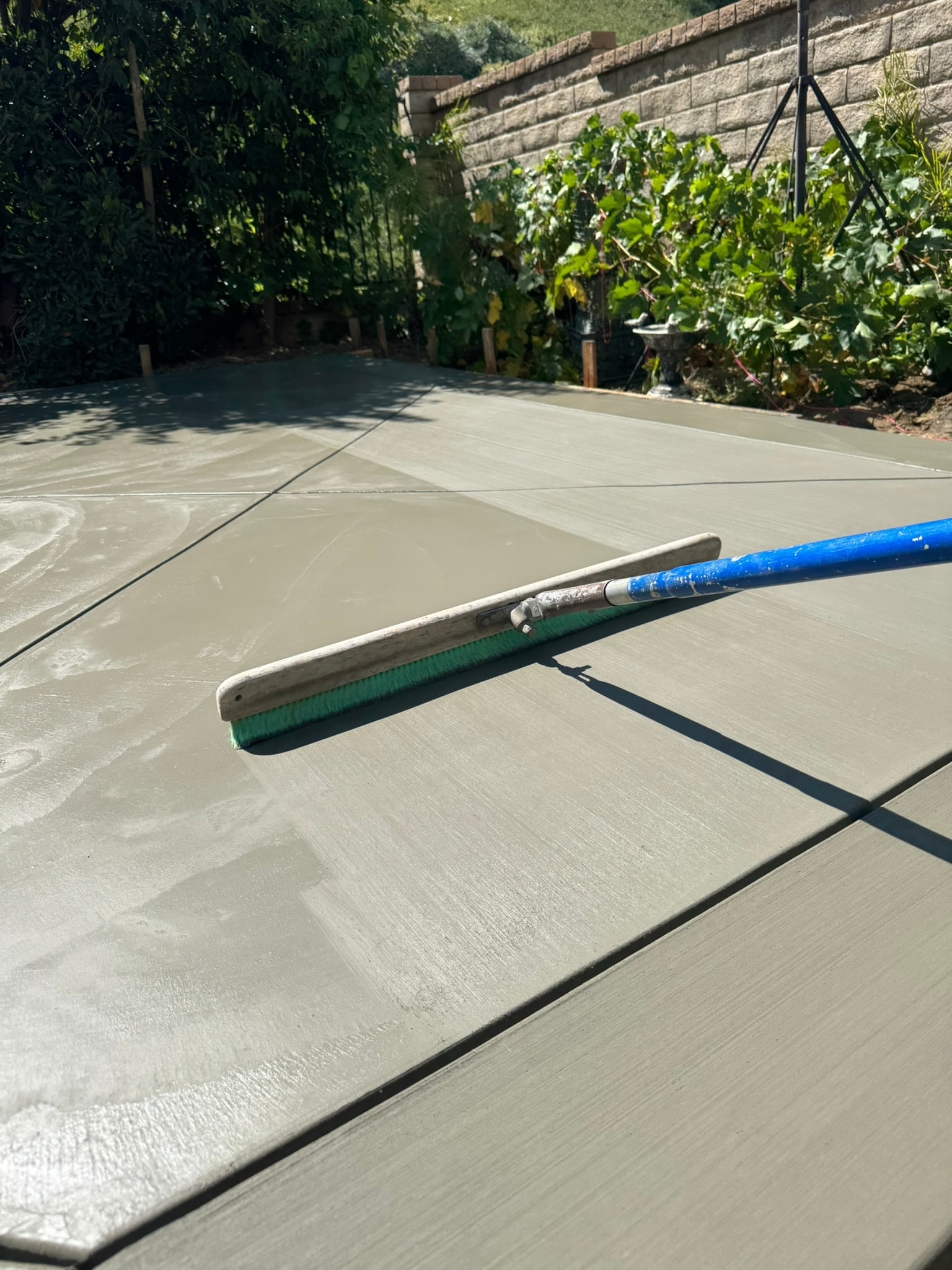
24–48 hours: foot traffic
Most concrete is safe for light foot traffic after 24 to 48 hours. Even then, avoid dragging anything across the surface or setting down heavy objects that could leave marks. The surface is firm, but the slab beneath is still building strength.
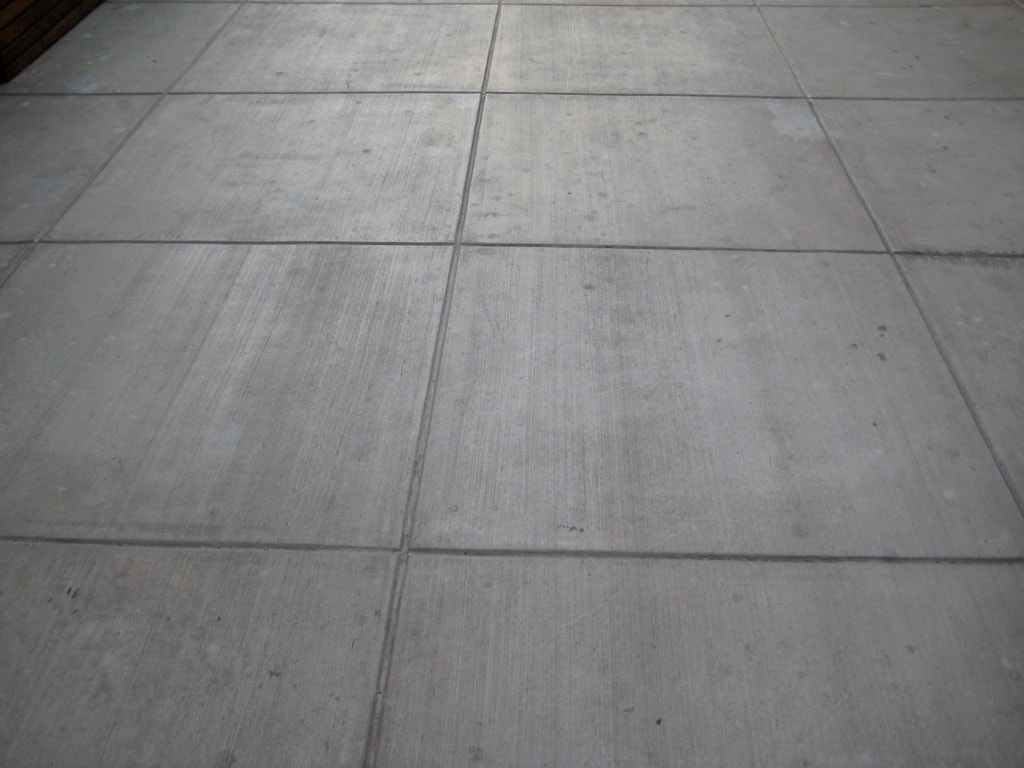
7 days: light vehicle traffic
For a new driveway, plan to wait at least 7 days before driving a car on it. At this point concrete has typically reached about 70% of its design strength — enough for normal vehicle weight, but not yet enough for anything heavier. Passenger cars are fine; delivery trucks and heavy SUVs should wait the full 28 days when possible.
28 days: full strength
Concrete reaches roughly 90–100% of its design strength around the 28-day mark. This is the benchmark used industry-wide, and it's when the slab can handle full loads — heavier vehicles, RVs, or anything you were holding off on. For commercial slabs and structural applications, the 28-day mark is the standard acceptance threshold.
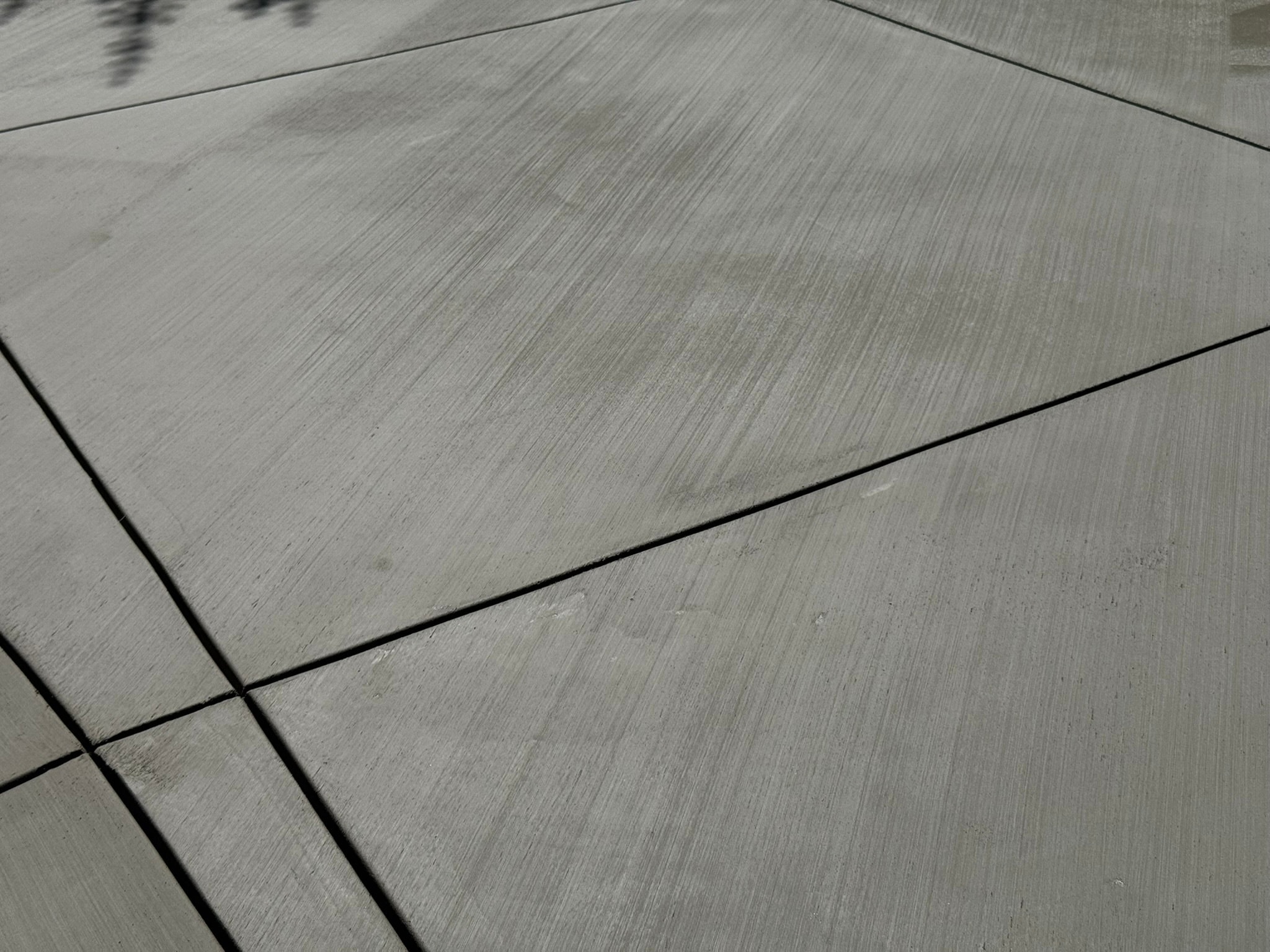
What affects cure time
Weather plays a real role here. Hot, dry weather can cause concrete to cure too fast on the surface while the interior lags behind, leading to cracking. Cold weather slows the whole process down. A contractor experienced with Southern California's climate will know how to time and treat a pour accordingly — including using curing compounds, wet burlap, or plastic sheeting when conditions call for it.
A few things to avoid during the cure window
- Don't drive or park on it early, even "just to check"
- Don't place planters, furniture, or heavy equipment on it in the first week
- Keep sprinklers and hoses off freshly poured concrete for the first few days
- Avoid de-icing salts or harsh chemicals near the surface
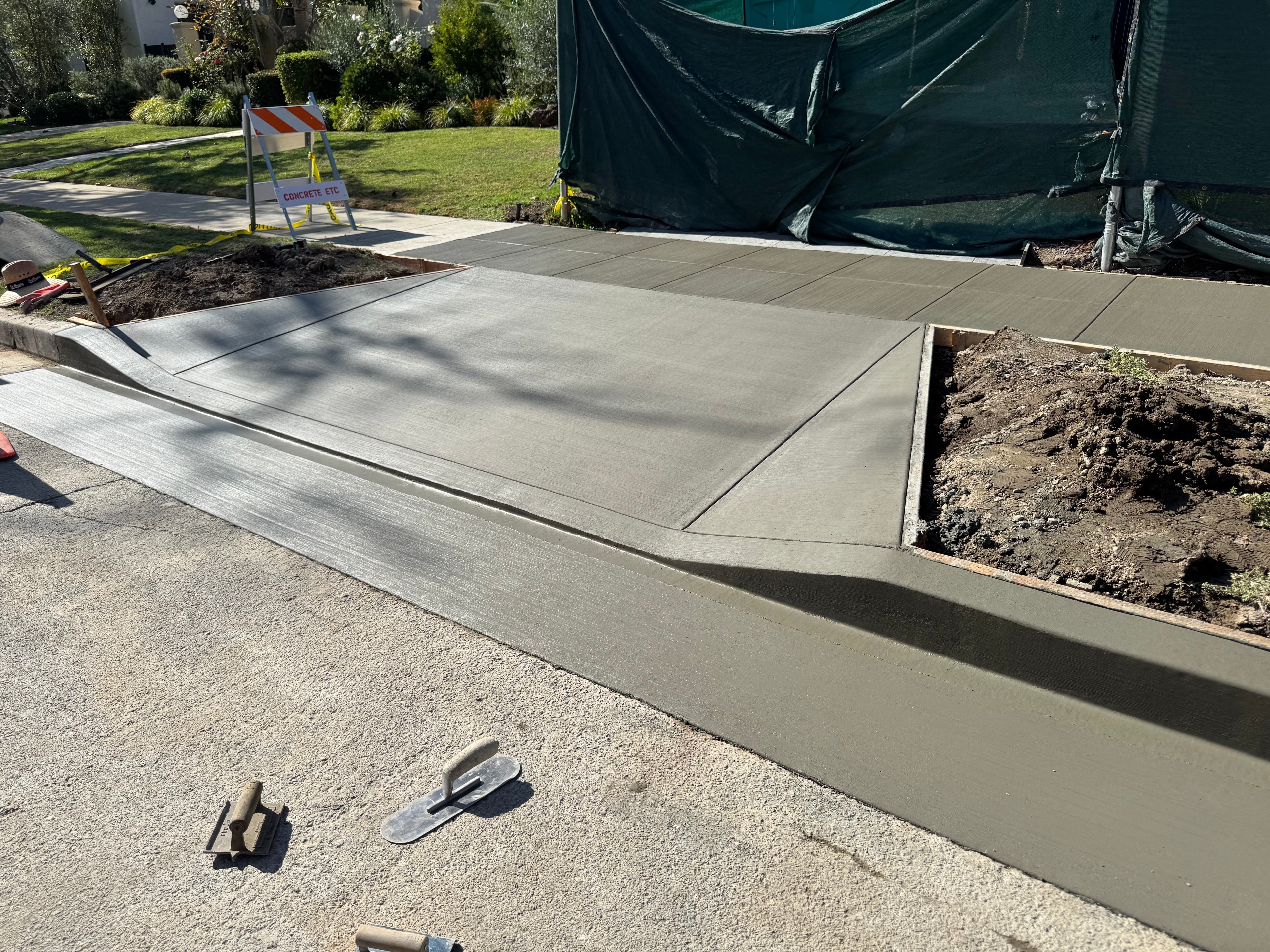
Getting it right from the start
Proper curing isn't just about waiting — it starts with a proper pour, correct mix design, and site prep. Concrete repairs are often the result of slabs that were rushed or poured without adequate preparation. Getting it right the first time is always less expensive than fixing it later.
Concrete Etc., Inc. has poured driveways, patios, and walkways throughout the Santa Clarita Valley, San Fernando Valley, San Gabriel Valley, and Los Angeles County since 2007, and we make sure every job is built to last well beyond the cure window.
Planning a new pour?
Contact Concrete Etc., Inc. to schedule an onsite consultation for your next concrete project.
Schedule a ConsultationConcrete Etc., Inc. — CSLB Lic. #895899 | B, C8 & C29 — Proudly serving the Santa Clarita Valley, San Fernando Valley, San Gabriel Valley, and Los Angeles County since 2007.
Related Reading
Serving Los Angeles County
Full service areas: San Fernando Valley, San Gabriel Valley, Los Angeles County